By: Stascha & Ida
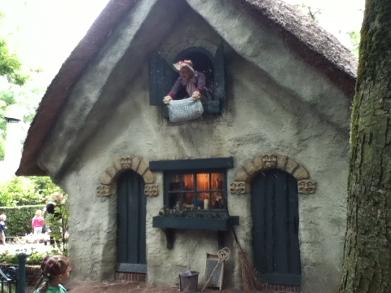 | The taleA widow has a hard-working and a lazy daughter, One day the hard-working daughter falls in a well and enters the magic land of Mother Hulda. Mother Hulda hires to clean the house and shake Mother Hulda's pillow to make it snow somewhere on the Earth. The girld does her work well, when she leaves she gets doused in gold. The lazy daughter then also jumps into the well, but because she is lazy she doesn't do her work well, therefore she gets doused in pitch. |
Background The writer: Mother Hulda is written by the Brothers Grimm and published in 1812. The Brothers Grimm (Jacob and Wilhelm) were born in Hanau, Germany. Culture & Environment: In the early 19th century the Romanticism and the Romantic nationalism rose fairy tales became more popular again. The Brothers Grimm wanted to publish the tales as a reflection of the German culture. Time: The Brothers Grimm lived in the 19th century. They published their story a little bit before Anderson. Probably Anderson was inspired by them. | 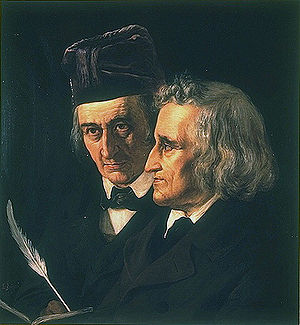 |
Lesson:
Lessons:
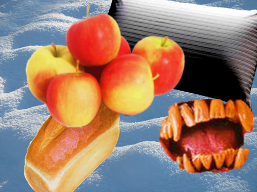
There are various lessons in the story of mother Hulda. The most important is you should work hard you will be rewarded. This is seen in, for example, the taking the bread out of the oven, shaking the apple tree so that the apples fall down and shaking mother Hulda’s pillow to make it snow on Earth.
Another lesson is that you should always keep loving your home. Even though the good girl is having a better life at mother Hulda, she does get homesick eventually and prefers to go home
I think a most interesting piece of this story is where the good girls is frightened of the big teeth of mother Hulda, where the bad girl is not, because she has heard about them already. This suggests that being biased because of appearance is a good thing. This makes me wonder whether the Grimm brothers maybe thought discrimination was a good thing. That big teeth should make you frightened could be a sort of metaphor for that black skin should make you frightened or another discriminative idea.
Symbols:
|  |
